

The Eternal Question: Who Works for Whom?
In short: Financial freedom means that your passive income covers your living expenses, so you no longer have to actively work for money. In this article, you will learn concrete strategies and steps to reduce debt, invest wisely, and build a system that makes your money work for you, with the specific benefit of gaining more time and independence.
The idea of no longer chasing a paycheck every month sounds like a distant dream for many. But is it really that unattainable? The reality is that most of us are stuck in a rat race: we work to pay bills, only to have to work again to pay new bills. But what if you could break this cycle and make your money work for you? It's a matter of perspective, strategy, and knowledge.
Financial freedom is not a coincidence, but the result of conscious decisions and disciplined execution. It's not about being rich in terms of luxury, but about regaining control over your time and your life. Imagine being able to pursue your passions, spend more time with your family, or simply travel without worrying about your income.
1. Laying the Foundation: Where Do You Stand Financially?
Before you can make your money work for you, you need to know where you stand. This is the most important first step. Many shy away from scrutinizing their finances, but without this clarity, you're operating in the dark.
1.1. Determining Your Net Worth
Your net worth is the sum of all your assets (bank balances, savings accounts, real estate, investments) minus your debts (loans, mortgages, credit card debt). It's like a financial snapshot that shows you whether you're in the black or in the red.
Tip: Create a detailed list. Be honest with yourself. You can't solve problems you don't know about. Use a simple Excel spreadsheet or a financial app like You Need A Budget (YNAB).
1.2. Managing Your Income and Expenses
Do you know exactly where your money goes every month? For most, the answer is a clear 'no'. A budget is not a straitjacket that restricts you, but a tool that gives you freedom. It shows you where you can save money and where you can direct your money instead.
- List your income: All sources of your income.
- Identify fixed costs: Rent, subscriptions, insurance, loan installments.
- Track variable expenses: Groceries, leisure, clothing. Use an app or a notebook.
- Set categories: Give every dollar a job (Zero-Based Budgeting).
2. Debt Reduction: The Path to Financial Relief
Debt is like an anchor holding you back. Especially high-interest debt (credit cards, consumer loans) eats into your ability to save and invest.
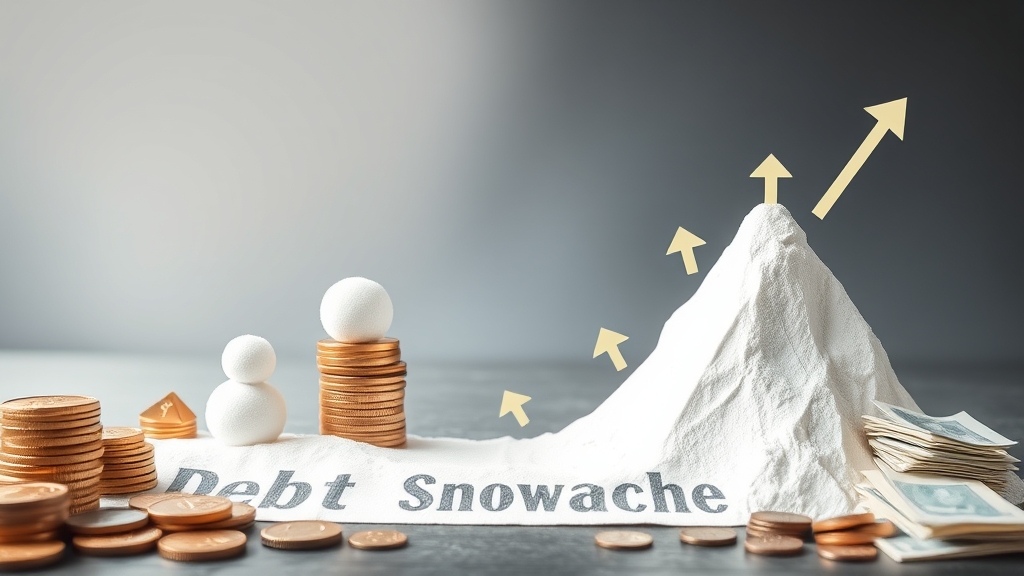
2.1. The Snowball or Avalanche Method
There are two common strategies for paying off debt:
- Snowball Method: You focus on the smallest debt first, while paying only the minimum on the others. Once the smallest debt is paid off, you take the freed-up amount and add it to the payment of the next smallest debt. The psychological success of each paid-off debt is incredibly motivating.
- Avalanche Method: Here, you focus on the debt with the highest interest rate first. Mathematically, this is the more efficient method, as it minimizes interest costs.
Choose the method that best suits your personality. Consistency, not perfection, is key.
2.2. Building an Emergency Fund: Your Safety Net
Before you seriously start investing, you should build an emergency fund. This is ideally 3-6 months' worth of expenses, held in an easily accessible savings account. This buffer protects you from unforeseen expenses (car repair, job loss) and prevents you from incurring new debt or having to prematurely touch your investments.
Practical Block: Your 3-Step Plan for Budget Mastery
This practical plan will help you immediately gain control over your spending and lay the foundation for financial freedom.
- Step 1: The Cash Audit (1 week): Collect all bank statements, credit card statements, and receipts from the last three months. Record every single income and expense in a spreadsheet. Categorize everything (rent, groceries, transport, leisure, subscriptions). Be brutally honest.
- Step 2: Create Your Budget (1 day): Set a realistic monthly budget. Use the 50/30/20 rule as a starting point: 50% for needs (rent, food), 30% for wants (hobbies, going out), 20% for saving and debt repayment. Adjust it to your situation. Identify at least three areas where you can immediately reduce expenses.
- Step 3: Implementation & Control (ongoing): Transfer your budget to an app (YNAB or a similar budgeting tool) or a simple notebook. Check weekly if you are on track. Adjust the budget as needed, but stay disciplined. Celebrate small successes when you stay under budget!
3. Making Your Money Work for You: Investing Made Easy
Once you have your finances under control and an emergency fund built up, it's time to make your money work for you. The magic word is investing.
3.1. Understanding the Power of Compound Interest
Compound interest is Albert Einstein's 'eighth wonder of the world'. It means that your earnings themselves generate further earnings. The earlier you start, the greater the effect. A small monthly sum invested over decades can grow into a significant fortune.
3.2. Simple and Diversified Investing: ETFs
For most private investors, Exchange Traded Funds (ETFs) are the best choice. These are exchange-traded index funds that track an entire market (e.g., the global stock market with the MSCI World Index). They are cost-effective, transparent, and broadly diversified, which minimizes risk.
- Broad Diversification: You automatically invest in hundreds or thousands of companies worldwide.
- Low Costs: ETFs have significantly lower fees than actively managed funds.
- Easy Handling: With a savings plan, you can invest a fixed amount monthly without constantly having to manage it. Providers like Scalable Capital or Trade Republic make this very easy.
Important: Investing carries risks. Inform yourself thoroughly and only invest money that you do not need in the long term. A good rule of thumb is an investment horizon of at least 10-15 years.
3.3. Diversifying Income Streams: Building Passive Income
Financial freedom is often achieved through multiple income streams. In addition to investing in ETFs, you might consider:
- Real Estate: Rental income (requires significant capital and effort).
- Dividend Stocks: Companies that distribute a portion of their profits to shareholders.
- Online Products/Services: E-books, courses, stock photos (requires initial effort).
- P2P Lending: Lending money to individuals or businesses (higher risk).
Conclusion: Your Path to Financial Independence Starts Today
The question of whether you work for your money or your money works for you is not philosophical, but practical. With the right strategies, you can turn the tables. It requires discipline, patience, and a willingness to confront your finances. Start today with an inventory, pay off debt, and kick off your investment plan. Every small step counts on the path to a self-determined life.
Remember that knowledge is power. The more you learn about finance, the better your decisions will be. And if you're looking for support to learn new skills that can open up additional income streams or advance your career, then Skill Tandem is the ideal platform for you. Find free learning partners and mentors to guide you on your journey.
Sign up for free and find a learning partner now!
FAQ: Frequently Asked Questions about Financial Freedom
What does financial freedom truly mean?
Financial freedom means that your passive income sources (e.g., rental income, dividends, interest from investments) are sufficient to cover all your living expenses. You no longer have to actively work for money and can decide how you spend your time.
How do I best start if I have significant debt?
The first step is always to get a clear overview of all your debts and their interest rates. Then, focus on aggressively paying off either the highest-interest debts (avalanche method) or the smallest debts (snowball method), while only paying the minimum on the others.
How much money do I need to be financially free?
This largely depends on your individual living expenses. A common rule of thumb is the '25x Rule': Multiply your annual expenses by 25. The result is the amount you should have invested to be financially free with a safe withdrawal rate of 4% per year.
Are ETFs really safe for long-term investments?
ETFs are relatively safe as a long-term investment due to their broad diversification across many companies and industries. They track the overall market, meaning you benefit from the global economy. However, there are always market fluctuations, and no gains are guaranteed.
Can I achieve financial freedom without a high income?
Yes, absolutely. The key lies not only in the amount of your income but much more in your savings rate and your expenses. By living consciously, controlling expenses, and investing early and consistently, you can achieve financial freedom even with an average income, though it may take longer.


Das kenn ich nur zu gut mit dem Hamsterrad! Ich hab vor einem Jahr angefangen, meine Ausgaben genau zu tracken und das hat mir echt die Augen geöffnet, was da alles so unnötig rausgeht. Seitdem fühlt sich das schon viel besser an.