
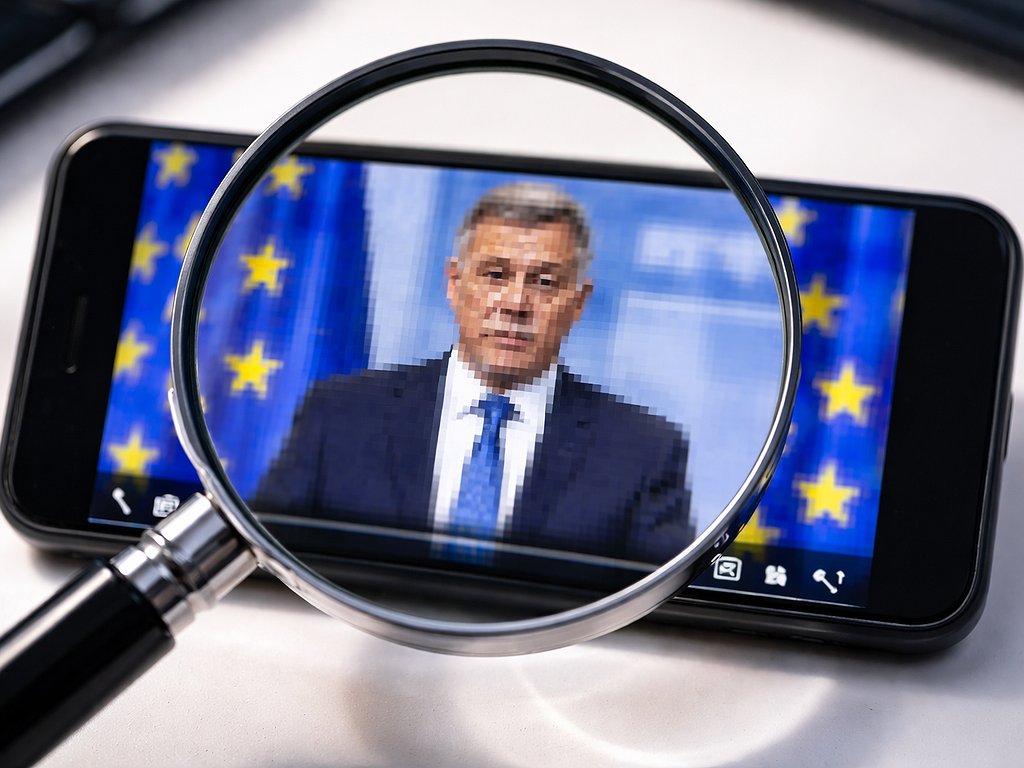
Deepfake Check 2026: How to Spot AI Fakes in the Super Election Year
A video of a top politician announcing their resignation just before an election? An audio clip where a candidate confesses secret plans? What once sounded like science fiction is now a harsh reality in Austria's super election year 2026. Thanks to modern AI models like Sora or VALL-E, often just 60 seconds of material are enough to create deceptively real copies of people.
These Deepfakes attack our fundamental trust: “I only believe what I see and hear.” To ensure you don't fall for manipulative content, we've summarized the most important recognition features for you.
1. The Biological Weaknesses of AI
Even if algorithms are extremely advanced in 2026, AI often still fails at physical and biological details. When watching videos, look for the following “glitch” signs:
- Unnatural Eye Reflections: Eyes normally reflect their surroundings. In deepfakes, reflections in the left and right eye often show different scenes or no reflection at all.
- Asymmetrical Blinking: Pay attention to whether the person blinks unnaturally rarely or asymmetrically. Often, eye movements appear rigid or “dead.”
- The Mouth-Audio Gap: When sounds like “P,” “B,” or “M” are made, pay close attention to the lips. Manipulated videos often show minimal delays or unclean transitions (visemes) here.
- Blurring Edges: Especially with fast head movements, the edges between the face and hair may flicker, or the transition to the neck may appear blurry (“Floating Face”).
2. Voice Cloning: When the Voice Lies
In 2026, audio fakes are often harder to unmask than videos. A short call or a voice message can now be perfectly imitated.
- The Breath Check: Real people run out of breath when speaking, and they pause at logical points. AI voices often sound rhythmically too perfect or breathe at points that make no sense.
- Metallic Sound: Listen for unnatural echoes or a “flat” timbre in the higher frequencies.
The 3-Second Rule: Before You Share
Before you share a shocking video on WhatsApp or social media, ask yourself these three questions:
- Emotional Triggers: Is this video trying to make me extremely angry or scared? (Emotional content is a primary driver for fakes).
- Source Check: Are reputable Austrian media outlets (APA, ORF, Standard, Presse, etc.) also reporting on it?
- Creator: Who first posted the video? An official channel or a newly created account with few followers?
3. Detection Tools (as of 2026)
There are now technical aids that can assist you in your analysis:
| Tool / Method | Function |
|---|---|
| Reverse Image Search | Google Lens or TinEye check if the image has appeared before in a different context. |
| Deepfake-O-Meter | An open-source platform that scans videos for AI probabilities. |
| Fact-Checking Sites | Use Austrian experts like Mimikama.at or the fact checks from the APA (Austria Press Agency). |
4. Why We Need to Be Especially Careful in Austria
In the election year 2026, disinformation campaigns often target local issues (inflation, neutrality, energy). Fakes are often created with dialect nuances to build trust. But be careful: even dialects can now be imitated astonishingly well by AI!
Conclusion: Vigilance is the Best Protection
Technology is constantly improving, but our most important weapon remains healthy skepticism. “Don’t believe everything you see – even if you see it.” When in doubt: don't share, verify first.
Become a Media Pro in Tandem! Have you seen a suspicious video and are unsure? On Skill Tandem, you can connect with media buddies. Discuss current news articles, share fact checks, and learn together how to unmask manipulative techniques. Digital civic courage begins with looking together!
FAQ: Frequently Asked Questions
Is creating deepfakes punishable in Austria?
Yes, as soon as personal rights are violated, reputation is damaged, or fraud is committed. In election campaigns, stricter rules also apply to political parties regarding the labeling requirement for AI content.
Are there watermarks in AI videos?
Thanks to the EU AI Act, high-risk AIs must label content. However, professional fakers often remove these metadata. So, never rely solely on the absence of a label.


Ich bin da noch skeptisch, ob man das wirklich so einfach erkennt. Die KI wird ja auch immer besser, da sind die Glitches bald Geschichte.
{ "reply", "Danke fuer deinen Kommentar, M. Hahn! Dein Punkt mit den "Glitches" ist echt gut und macht mir bewusst, wie schnell sich das alles entwickeln wird. Spannend zu sehen, wie sich das in Zukunft aendert!" }