Bodyweight Fitness 2025/2026: Which Trends Are Hot and How Can You Benefit?
In short: The fitness world in 2025/2026 is increasingly focusing on personalized, technology-enhanced, and community-driven bodyweight workouts that maximize flexibility and efficiency. In this article, you'll discover which specific trends are dominating, how to integrate them into your daily life, and the benefits they offer for your health and well-being.
1. The Rise of Hybrid Training: Bodyweight Meets Technology
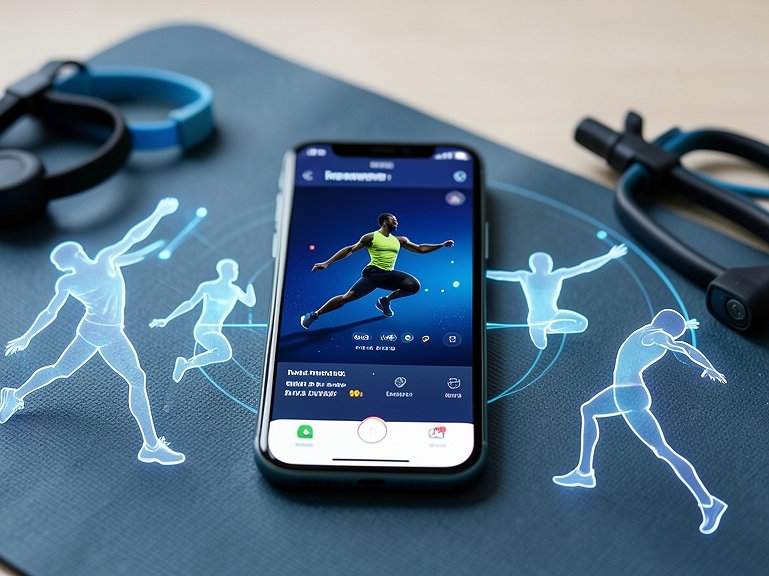
The lines between traditional training and digital support are increasingly blurring. In 2025/2026, we're seeing an explosion of hybrid training approaches that combine bodyweight exercises with smart technologies. This doesn't mean you need to buy equipment, but rather that you utilize apps, wearables, and AI-based programs to optimize your training.
1.1. Personalized AI Coaches for Bodyweight
Forget generic training plans. Modern AI algorithms analyze your performance, fitness level, progress, and even your mood to create dynamically adapted bodyweight workouts. These coaches learn from your data and adjust intensity, exercise selection, and repetitions in real-time. Platforms like Freeletics or Nike Training Club are continuously evolving these features.
Tip: Use the trial periods of fitness apps to find out which AI coach best suits your needs. Look for adaptive difficulty levels and personalized feedback.
1.2. Gamification and VR/AR Integration
Training becomes a game! Gamification elements motivate through rewards, progress bars, and leaderboards. In bodyweight training, we're increasingly seeing VR and AR applications that bring virtual environments or playful challenges into your living room. Imagine doing squats while virtually climbing a mountain or push-ups as part of an interactive game. This not only boosts motivation but also makes training more varied and enjoyable. An example of this is the game Ring Fit Adventure, which already points the way.
2. Functional Training and Mobility in Focus
The trend is moving away from pure muscle building towards holistic fitness that emphasizes mobility, stability, and the ability to perform everyday movements efficiently. Bodyweight training is perfectly suited for this.
2.1. Animal Flow and Movement Practices
Animal Flow, a blend of yoga, breakdancing, gymnastics, and capoeira, is rapidly gaining popularity. It uses your own body weight to improve strength, flexibility, coordination, and endurance. The fluid movements mimic animal motions and are a fantastic way to train the entire body and enhance body awareness. Similar movement practices, inspired by masters like Ido Portal, are becoming increasingly accessible.
2.2. Pre- and Rehab Workouts Without Equipment
Prevention and rehabilitation are becoming ever more important. Many people recognize the value of bodyweight exercises to prevent injuries or recover after an injury. Gentle mobility flows, targeted stabilization exercises, and isometric holds that require no equipment are an integral part of many modern training plans – often developed in collaboration with physical therapists.
3. Micro-Workouts and Mindfulness: Fitness in Everyday Life
The hectic daily routine demands flexible solutions. The trends for 2025/2026 show that short, effective bodyweight sessions that seamlessly integrate into the day are increasingly in demand. Mindfulness plays a central role here.
3.1. 'Snackable' Workouts and Movement Breaks
Instead of one long training session, several short, intense bodyweight workouts – so-called 'fitness snacks' – spread throughout the day are on the rise. A 10-minute session in the morning, a few squats and push-ups during lunch break, a mobility flow in the evening. Studies show that these micro-workouts can be just as effective as a long session if performed regularly. Apps like Seven are already pioneers in this field.
3.2. Mindful Movement and Body Scan Exercises
The connection between movement and mindfulness is growing stronger. Bodyweight training offers an excellent opportunity to focus on your own body. Mindful movement, where every muscle contraction and stretch is consciously perceived, promotes not only physical but also mental health. Body scan exercises before or after training help to better understand the body and listen to its signals.
Practical Block: Your 15-Minute Hybrid Bodyweight Flow for Daily Life
This flow combines functional bodyweight exercises with a focus on mindfulness and can be performed anytime, anywhere. Ideal for trying out the latest trends yourself.
- Warm-up (2 minutes): Start with gentle joint circles (shoulders, hips, knees, ankles). Do 30 seconds of unweighted squats to activate your muscles.
- Animal Flow Inspired (3 minutes): Perform the 'Beast Crawl': Get on all fours, knees hovering slightly above the ground, and move forwards and backwards. Focus on a fluid, controlled movement.
- Functional Strength (5 minutes): Alternate between 10 push-ups (on knees or feet), 15 squats, and 10 lunges per leg. Perform each exercise slowly and with control, paying attention to correct form. Take short breaks between sets.
- Mindful Mobility (3 minutes): Lie on your back and do the 'World's Greatest Stretch': One leg forward, the other extended back. Rotate your torso towards the front leg and look after your hand. Hold each side for 30 seconds. Feel the stretch in your hip and spine.
- Cool-down (2 minutes): Finish with a short meditation or a body scan, consciously perceiving all body parts and breathing deeply.
Conclusion: The Future of Fitness is Flexible and Personal
The bodyweight fitness trends for 2025/2026 clearly show: fitness is becoming more accessible, more flexible, and more tailored to individual needs. Whether through AI-powered coaches, playful elements, or integration into daily life – your own body weight remains the most versatile and effective training tool. Use these developments to redesign your training and stay motivated in the long run.
And remember: fitness is even more fun when you're not alone! On Skill Tandem (skilltandem.app), you can find like-minded individuals for joint sports sessions, training partners, or mentors to support you on your fitness journey, completely free of charge. It's the perfect platform to connect and get fit together. Sign up for free and find your sports buddies!
FAQ: Frequently Asked Questions about Bodyweight Trends 2025/2026
What advantages do bodyweight workouts offer compared to equipment training?
Bodyweight workouts promote functional strength, improve body control, coordination, and flexibility, can be done anytime, anywhere without equipment, and minimize the risk of injury as they utilize natural movement patterns. They are also cost-effective and ideal for travel.
Can you really build muscle with bodyweight training?
Yes, absolutely! Through progressive overload – for example, by increasing repetitions, shortening rest periods, using more complex exercise variations, or unilateral exercises – you can effectively build muscle and increase your strength with bodyweight training. Many calisthenics athletes are the best proof of this.
Are fitness apps with AI coaches really useful for bodyweight training?
Yes, fitness apps with AI coaches can be very useful as they create personalized training plans that adapt to your individual performance level and progress. They often provide detailed feedback, motivation, and a wide variety of exercises that ensure varied and effective training.
How do I best integrate micro-workouts into my work routine?
Schedule fixed times for your micro-workouts, e.g., 5-10 minutes before starting work, during your lunch break, and in the late afternoon. Use timers or reminders. Focus on high-intensity exercises like squats, push-ups, or planks that engage many muscle groups in a short time. Stand up, move, and make fitness snacks a regular habit.
What is Animal Flow and is it suitable for beginners?
Animal Flow is a bodyweight training system that uses fluid, animal-like movements to improve strength, flexibility, coordination, and endurance. It is suitable for beginners as the movements can be scaled and adapted to any fitness level. However, it requires some practice and body control to perform the sequences fluidly.


Ich bin mir nicht sicher, ob diese KI-Coaches wirklich so personalisiert sind, wie sie tun. Am Ende ist es doch immer noch ein Algorithmus, der feste Programme hat und nicht wirklich auf individuelle Tagesform eingeht.