
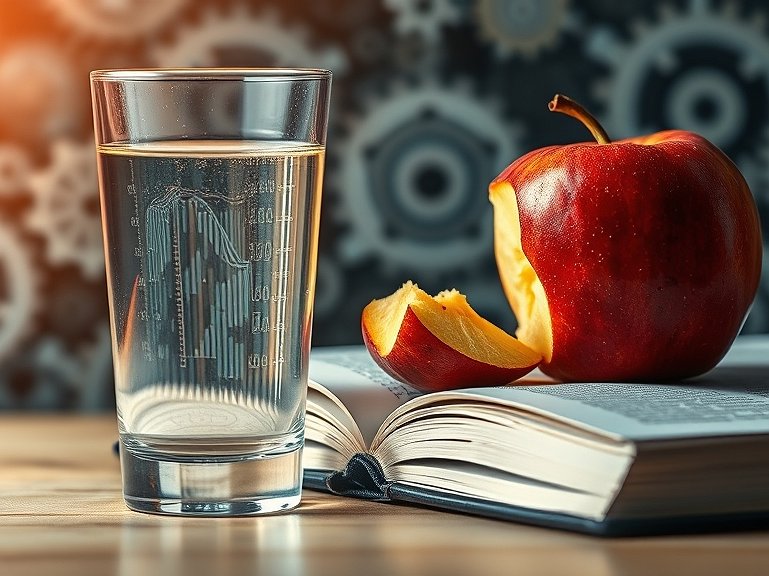
The 8-Glass Myth: A Hydration Rule Standing on Shaky Ground
In short: No, the blanket rule of drinking exactly 8 glasses of water per day is a myth and not scientifically supported. Your actual fluid intake needs are highly individual and depend on many factors. In this article, you will learn why the 8-glass rule is misleading, what scientific findings exist on hydration, and how to properly assess your personal water requirements to stay optimally hydrated.
Have you ever wondered if you're drinking enough? Few health tips are as widespread as the recommendation to consume eight glasses of water daily. You hear it from friends, read it in magazines, and the water bottle becomes a constant companion. But where did this rule come from, and does it stand up to scientific scrutiny?
The answer is surprising: the '8 glasses of water' rule is a persistent myth that has endured for decades, despite little scientific evidence suggesting it applies equally to everyone. In fact, this blanket recommendation can even lead to unnecessary stress if you try to reach a specific volume that may not correspond to your actual needs.
1. Where Did the 8 Glasses of Water Myth Come From?
The exact origin of the 8-glass myth is difficult to trace, but a frequently cited source is a recommendation from the Food and Nutrition Board of the National Research Council in 1945. It stated that the average adult needs about 2.5 liters of fluid per day. However, the crucial, often overlooked, addition was: 'Most of this quantity is contained in prepared foods.'
Over time, this important context was forgotten or ignored, and the recommendation transformed into the assumption that one must drink 2.5 liters of pure water in addition to food. Eight 250 ml glasses equate precisely to this amount. Thus, a general fluid recommendation became a specific water consumption myth.
Important Note: Many health recommendations are based on old studies or have been simplified and taken out of context over time. Critical questioning is invaluable here!
2. The Scientific Truth: Your Fluid Needs Are Individual
Modern research and medical guidelines emphasize that fluid requirements vary greatly. There is no 'one size fits all' when it comes to daily water intake. Instead, a number of factors play a role:
- Body Weight and Composition: Larger and heavier individuals generally need more fluids.
- Activity Level: Those who exercise or perform physically demanding work sweat more and need to compensate for this loss.
- Climate: In hot or humid conditions, the need increases significantly.
- Health Status: Fever, vomiting, diarrhea, or certain illnesses (e.g., kidney disease) can alter requirements. Pregnancy and breastfeeding also increase the need.
- Diet: Fluid is not only found in drinks! Fruits and vegetables (e.g., cucumbers, melons) are largely composed of water and contribute significantly to fluid intake. Soups, yogurt, and other foods also provide water.
The German Nutrition Society (DGE) recommends adults consume about 1.5 liters of fluid per day through beverages. The remaining approximately 1 liter is obtained through solid food. With increased physical activity or heat, this value can be significantly higher.
2.1. How Your Body Tells You What It Needs: Thirst as an Indicator
Perhaps the best and most natural indicator of your fluid needs is your sense of thirst. Your body is a master of self-regulation. When you feel thirsty, it's a clear signal that you should drink. It's a myth that thirst is already a sign of dehydration; usually, the body reacts before critical fluid loss occurs.
Tip: Pay attention to the color of your urine. Light yellow to clear urine is a good sign of adequate hydration. Dark yellow urine often indicates that you should drink more.
3. Dangers of Over- and Under-Hydration
While mild dehydration can lead to fatigue, headaches, and difficulty concentrating, severe dehydration is a medical emergency. However, the opposite – excessive water intake – can also be dangerous. A condition called hyponatremia (water intoxication) occurs when one drinks extremely large amounts of water in a short period, causing blood sodium levels to drop dangerously low. While rare, this can happen to extreme athletes or due to improper drinking recommendations.
Practical Check: Determining Your Individual Water Needs
Instead of sticking to a rigid rule, learn to listen to your body's signals and adjust your intake. Here's how to do it:
- Observe your thirst: Drink when you are thirsty. This is the most important and reliable indicator.
- Check your urine color: Is your urine light yellow to clear? Great! Is it dark yellow? Drink more.
- Consider your activity level: Are you exercising or having a physically demanding day? Plan for additional fluids. A good rule of thumb is to drink an extra 0.5 to 1 liter per hour of intense activity after exercise.
- Think about the climate: In summer or hot environments, the need is higher.
- Incorporate water-rich foods: Eat plenty of fruits and vegetables. Cucumbers, tomatoes, melons, and salads are excellent sources of fluid.
- Always have water readily available: A reusable water bottle at your desk or in your bag helps you drink small amounts regularly without having to think about it.
- Use apps or trackers (optional): If you're unsure, you can initially use an app like MyFitnessPal or Waterllama to track your fluid intake and develop a sense of your needs.
Conclusion: From Myth to Individual Mindfulness
The myth of 8 glasses of water per day is a classic example of how a well-intentioned but oversimplified recommendation can become a rigid dogma. Science clearly shows: your fluid needs are dynamic and unique. Instead of clinging to an arbitrary number, it is much more effective and healthier to listen to your body's signals, consider your lifestyle, and ensure a diverse fluid intake through beverages and foods.
Critical thinking and lifelong learning are important not only for complex topics but also for seemingly simple health tips. Question popular advice, seek information from reliable sources, and learn what works best for you personally. This is exactly what Skill Tandem helps you with. On our completely free platform, you can find learning partners and mentors who will help you sharpen critical thinking skills, explore new topics, and acquire evidence-based knowledge in all areas of life.
Sign up for free and expand your knowledge!
FAQ: Frequently Asked Questions about Drinking Water and Hydration
What is the best way to determine my daily water intake needs?
The best way is to pay attention to your thirst and the color of your urine. Drink when you are thirsty and ensure your urine is light yellow to clear. Also consider your activity level, climate, and diet.
Does coffee or tea count towards my daily fluid intake?
Yes, coffee and tea contribute to your fluid intake. While caffeine has a mild diuretic effect, the fluid loss from a normal amount of coffee or tea is minimal and more than offset by the fluid contained.
Can drinking too much water be dangerous?
Yes, in rare cases, excessive water intake, especially in a short period, can lead to hyponatremia (water intoxication), where blood sodium levels drop dangerously low. However, this usually only occurs with extreme amounts or certain medical conditions.
Should I add electrolytes to my water?
For most people who eat a balanced diet, additional electrolytes are not necessary during normal activity. During intense exercise, heavy sweating, or illnesses like diarrhea, electrolyte drinks can be useful to replenish lost minerals.
Is there a minimum amount of water I should drink per day?
The German Nutrition Society (DGE) recommends adults consume about 1.5 liters of fluid per day through beverages to ensure adequate hydration. This is a good guideline that should be adjusted based on individual factors.


Ich trinke einfach immer wenn ich Durst hab und merke, dass das fuer mich gut funktioniert. Mit der festen Gläserzahl hab ich mich immer nur gestresst.