Remote & Hybrid: The Science of Efficient Work
By 2024 at the latest, it's clear: the hybrid model is here to stay. But while flexibility is valued, many struggle with the blurring of work and private life or distractions from the fridge.
Studies from 2025 and early 2026 clearly show that productivity in the home office is not by chance, but the result of targeted routines and psychological triggers. Here's how you can elevate your performance to the next level.
1. The “Deep Work” Factor: Why Silence in the Home Office is Golden
According to Georgetown University studies, the ability to concentrate deeply (Deep Work) is the decisive factor for knowledge workers. In the office, one is interrupted every 11 minutes on average.
- The Insight: Remote days should be consistently reserved for complex tasks that require no consultation.
- The Tip: Use “Time Blocking.” Block out 90-minute windows in your calendar during which Slack and emails remain consistently closed.
2. The Paradox of Flexibility: Structure Gives Freedom
A large-scale meta-study has shown that people without fixed start and end times in the home office paradoxically achieve less, even though they work longer. The brain needs clear signals for when “work mode” begins.
- Create Rituals: A short walk (“fake commute”) or changing into work clothes signals to your subconscious: It’s time to deliver.
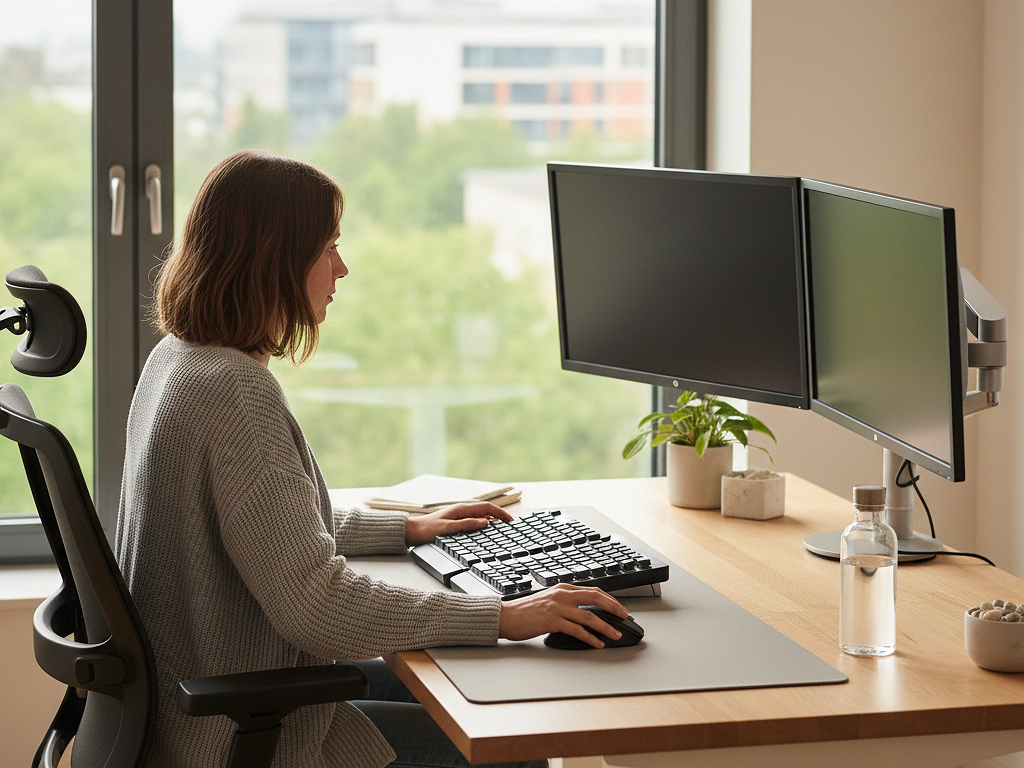
- Workplace Separation: If possible, don't work where you sleep or eat. Spatial anchoring is psychologically essential for focus.
3. Communication: The 24-Hour Rule Against Stress
Hybrid teams often suffer from “Digital Overload.” Studies show that the pressure to respond immediately to chat messages increases stress levels by up to 30%.
- Asynchronous Communication: Establish rules within the team. Not every message requires an immediate response.
- Avoid Video Fatigue: Research suggests that cameras should be turned off more often in large meetings to reduce cognitive load.
4. Social Isolation vs. Focus: The Right Mix Makes It
Why do we still go to the office? Studies on “Social Capital” prove that informal exchange (the classic coffee break chat) strengthens innovation.
- Office Days for Collaboration: Use in-office days specifically for brainstorms, feedback sessions, and team building.
- Remote Days for Execution: Use the quiet at home for implementing the discussed topics.
“Productivity means not doing more, but doing the right thing in the right place with the right focus.”
5. The Role of the Break: The 52-17 Rule
Data from time-tracking apps show that the most productive 10% of employees don't work longer, but take smarter breaks. The most effective ratio seems to be 52 minutes of focus and 17 minutes of break.
Important: A break in front of the screen is not a break. Stand up, move around, or look out the window.
6. Conclusion: Find Your Individual System
There is no “one-size-fits-all.” Science provides the framework, but you have to fill it yourself. Test different methods for two weeks and evaluate your energy level.
Do you want to share your productivity hacks or are you looking for someone for a weekly check-in?
On Skill Tandem, you'll find like-minded individuals who are also refining their time management. An “accountability partner” can work wonders to truly stick to new resolutions!
FAQ: Frequent Questions about Remote Work
Does Home Office Harm Your Career?
Only if you become “invisible.” Make sure to actively communicate your successes and be present at important hybrid meetings.
How do I Deal with Distraction from Family or Roommates?
Communication is everything. A visual signal (e.g., a closed door or headphones) helps others understand when you are “in the zone.”



Das mit dem Time Blocking erinnert mich total an die Pomodoro-Technik, die nutze ich auch oft. Ist ja im Prinzip ähnlich, oder.
Absolut Lisa! Die Pomodoro-Technik ist super und ja, das Prinzip ist total aehnlich, nur in kleineren Einheiten, oder. Ich find's auch hilfreich, nach jeder Pomodoro-Einheit kurz aufzustehen und mich zu strecken, das macht echt einen Unterschied.