Is your language anxiety truly as insurmountable as you think?
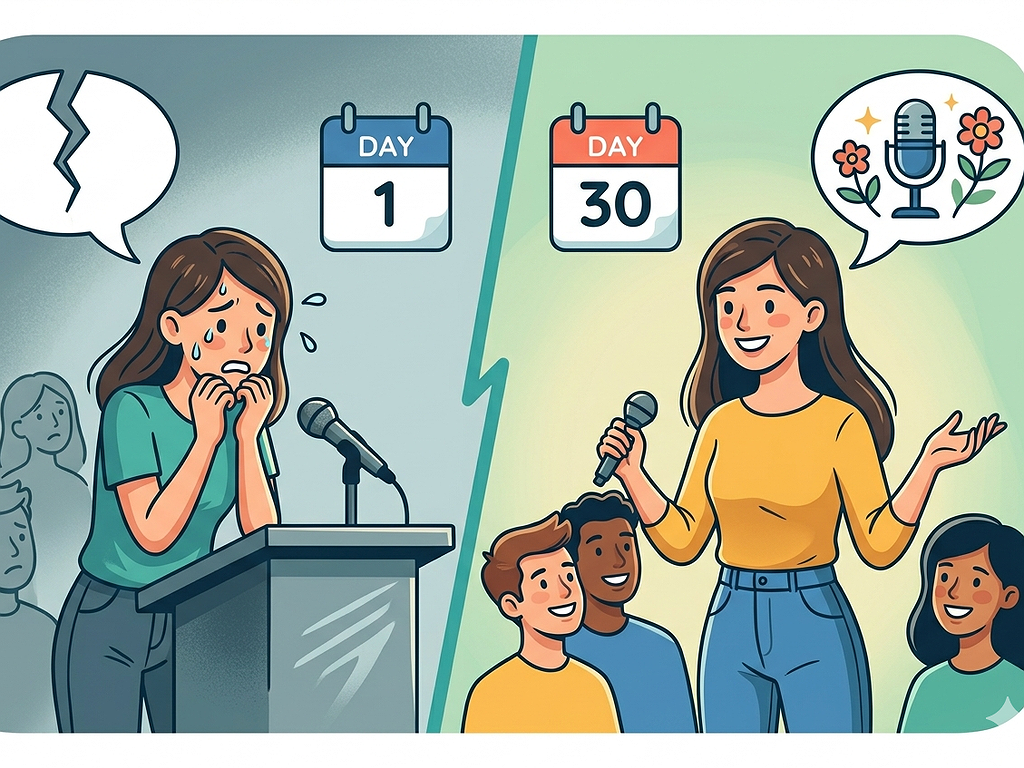
In short: No, language anxiety is not an insurmountable fate. While it's unrealistic to become fluent in a new language in 30 days, you can significantly reduce your language anxiety and build a solid foundation for confident speaking during this period with targeted strategies and the right mindset.
Do you often feel paralyzed when you have to speak a new language? Are you afraid of making mistakes, of being judged by others, or simply of not finding the right words? You are not alone! Language anxiety, also known as foreign language anxiety, is a widespread phenomenon that affects many learners. But the good news is: there are ways to overcome this fear – and faster than you might think.
We often hear the myth that you can only lose your fear through years of flawless speaking. Or that you have to be a 'natural talent' to communicate without anxiety. But science shows us a different picture: language anxiety is often a learned response that can be effectively combated with targeted psychological and practical approaches. It's not about being perfect, but about finding the courage to speak and continuously taking small steps.
1. The Myth of Instant Perfection: Why Language Anxiety Paralyzes Us
Perhaps the biggest myth surrounding language anxiety is the idea that you should only speak when you are 'perfect' or no longer make mistakes. This mindset is a vicious cycle: it leads us to avoid speaking, which in turn intensifies anxiety and prevents us from developing further. Studies, such as the pioneering work by Horwitz et al. (1986), show that language anxiety is often not related to a lack of ability, but to excessive self-criticism and the fear of negative judgment.
Important Note: Perfection is the enemy of progress, especially when learning languages. Accept that mistakes are a natural and necessary part of the learning process. Every native speaker started somewhere and made mistakes.
1.1. The Science of Language Anxiety: What Happens in Our Brain?
When we experience language anxiety, our brain often activates the 'fight or flight' mode. The limbic system, especially the amygdala, reacts to the perceived threat (e.g., the fear of embarrassing oneself) and releases stress hormones. This can lead to symptoms such as a racing heart, sweating, blackouts, and the inability to recall vocabulary that you actually know. These physiological reactions are real and not 'imagined'. Understanding them is the first step to overcoming them.
2. The Reality of the 30-Day Challenge: Achievable Steps to Success
While 30 days are not enough to master a language fluently, they are more than enough to significantly reduce your language anxiety and improve your speaking ability. The key lies in constant, low-threshold exposure and the development of self-efficacy.
2.1. Week 1: Identify the Fear and Take Small Steps
Start by naming your fears. Write down exactly what you are afraid of (e.g., 'I'm afraid my conversation partner won't understand me', 'I'm afraid of being laughed at').
- Tip: Keep an 'anxiety journal'. Note situations where language anxiety occurs and how you react to them.
- Practice: Begin with small-scale exposure therapy. Speak aloud to yourself in the target language for 5 minutes daily. Describe your day, read a text aloud, or sing a song. This helps to lower inhibitions.
2.2. Week 2: Active Listening and Imitation
This week, you will focus on internalizing the language melody and pronunciation. Active listening helps to build confidence in your own hearing and pronunciation.
- Tip: Use resources like YouTube channels for language learners, podcasts (Spotify offers many), or language learning apps like Duolingo and Busuu.
- Practice: Watch short videos and try to repeat sentences or dialogues. Don't focus on perfection, but on imitating rhythm and intonation.
2.3. Week 3: Targeted Interaction and Error-Friendliness
Now it's time to expand your comfort zone a bit. Look for opportunities for interaction, even if they are still small.
- Tip: Find a language partner on platforms like Skill Tandem. The platform is ideal for exchanging in a safe environment.
- Practice: Plan short, topic-limited conversations. For example: 'Today I only want to talk about my hobby' or 'Today I want to ask five questions and answer five.' Agree with your partner that mistakes are okay and that you will support each other.
2.4. Week 4: Reflection and Integration into Everyday Life
This week serves to consolidate and integrate what you have learned into your daily life. It's about making new, less anxious speaking a habit.
- Tip: Set realistic, small goals for further practice after the 30 days.
- Practice: Try to incorporate the target language into everyday situations. Order in a restaurant in the target language, ask for directions, or have a short conversation with a native speaker if the opportunity arises.
Practice Block: Your 30-Day Anti-Anxiety Plan
This plan will help you systematically address your language anxiety and achieve noticeable success in just 30 days. It is based on gradual exposure and building self-confidence.
- Day 1-7: Recognize Internal Barriers. Take 10 minutes daily to write down your specific fears about speaking. Afterwards, speak aloud to yourself in the target language for 5 minutes. Read a short text aloud or describe your day.
- Day 8-14: Listen and Repeat. For 15-20 minutes daily, choose an audio source (podcast, YouTube video) in your target language. Listen actively and repeat sentences or phrases. Use the pause function to accurately imitate.
- Day 15-21: Controlled Interaction. Find a language partner on Skill Tandem or in a local group. Arrange 2-3 short (15-20 minutes) conversations per week. Focus: Choose a simple topic (e.g., hobbies, weather) and aim to just speak, without perfectionism.
- Day 22-30: Daily Integration & Reflection. Consciously try to integrate the target language into your daily life: order your coffee, ask for directions, or write short messages. At the end of each day, reflect on your small successes and what you can still improve. Celebrate every sentence spoken!
Conclusion: Your Path to More Language Confidence Starts Now
The idea that language anxiety is an insurmountable obstacle is a myth. With targeted, scientifically sound strategies and the willingness to take small steps, you can achieve a remarkable change in your ability to speak without anxiety in 30 days. It's not about being perfect, but about finding the courage to speak at all. Every word, every sentence, every interaction brings you closer to your goal. The realization that mistakes are learning opportunities, not reasons for shame, is key.
Remember that lifelong learning and critical thinking mean questioning old beliefs and trying new approaches. Your language journey is a perfect example of this. Use the community platform Skill Tandem to find a suitable learning partner or mentor who can support you on this journey. It's a completely free platform that helps you achieve your goals.
Sign up for free and find a language partner!
FAQ: Frequently Asked Questions about Overcoming Language Anxiety
How long does it take to overcome language anxiety?
The duration is individual, but with targeted exercises and regular exposure, many people can make noticeable progress and significantly reduce their anxiety within 30 days. It is a continuous process that begins with small successes.
Is language anxiety the same as shyness?
No, language anxiety is more specific. While shyness is a general tendency to be reserved in social situations, language anxiety refers to the fear of speaking in a foreign language, often due to the fear of making mistakes or negative judgment.
Can I overcome language anxiety without a language partner?
Yes, you can make progress by speaking to yourself, reading aloud, or using language learning apps. However, a language partner or mentor can significantly accelerate the process and provide valuable feedback and a safe practice environment.
What role do mistakes play in overcoming language anxiety?
Mistakes are an absolutely necessary and natural part of the learning process. They are not embarrassing, but valuable opportunities to learn and improve. Accepting mistakes is crucial for reducing language anxiety.
What should I do if I have a blackout while speaking?
That's normal! Take a moment, breathe deeply. You can also use a phrase like 'Excuse me, I'm just looking for the right words.' This often helps to relax the situation and reduce the pressure.



0 Comments
No comments yet. Be the first to write something! 🎉