
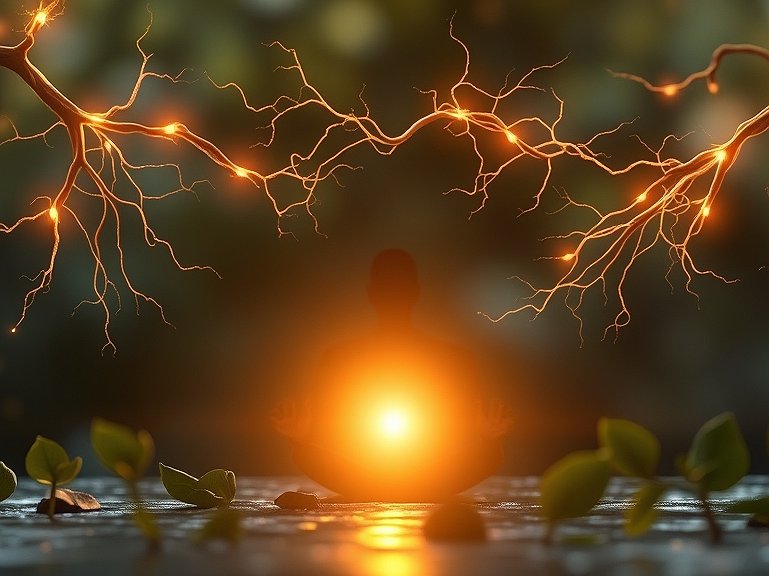
Do you often feel overwhelmed, stressed, or anxious? The Vagus Nerve is your key to instant relaxation!
In short: You can stimulate your vagus nerve through simple, targeted exercises in just 5 minutes to reduce stress, calm your nervous system, and restore a sense of inner peace. This article will explain how the vagus nerve works and provide practical, proven techniques you can apply immediately to control your stress response.
In our fast-paced world, stress is a constant companion. Whether it's professional pressure, personal challenges, or the continuous flood of information – our bodies often react with tension, anxiety, and a feeling of overwhelm. But what if there was a direct way to interrupt this stress response and quickly bring your system back into balance?
This is where the vagus nerve comes in. It's the longest nerve in your autonomic nervous system and plays a central role in regulating stress, inflammation, and even your mood. By learning to specifically stimulate this nerve, you can harness your body's power to calm yourself in minutes.
1. What is the Vagus Nerve and Why is it So Important?
The vagus nerve, also known as the tenth cranial nerve, is a fascinating communication network that extends from your brainstem through your neck and chest into your abdomen. It's a major component of the parasympathetic nervous system, often called the 'rest-and-digest system' – in contrast to the sympathetic nervous system, which is responsible for the 'fight-or-flight response.'
- Brain-Body Connection: The vagus nerve is a bidirectional highway exchanging information between your brain and almost all major organs (heart, lungs, intestines).
- Stress Regulation: One of its main functions is to lower heart rate, stimulate digestion, and reduce inflammation when you're stressed. High vagal nerve activity (high vagal tone) is associated with resilience, emotional regulation, and a sense of well-being.
- Immune System and Mood: Studies show that the vagus nerve also influences the immune system and plays a role in the production of neurotransmitters like serotonin, which positively affects mood and anxiety.
Important Note: A low vagal tone is often linked to chronic stress, inflammation, anxiety disorders, and depression. The good news is that you can actively train and strengthen your vagal tone!
2. Recognizing Signs of an Overloaded Nervous System
Before we dive into solutions, it's important to understand when your vagus nerve might need support. Do you recognize any of the following symptoms?
- Physical Symptoms: Racing heart, shallow breathing, muscle tension (especially neck and shoulders), digestive issues (IBS), chronic fatigue, headaches.
- Emotional Symptoms: Constant irritability, anxiety, panic attacks, difficulty relaxing, feelings of overwhelm, concentration problems, sleep disturbances.
- Behavioral Patterns: Impatience, social withdrawal, increased sensitivity to noise or light, feeling constantly 'on edge.'
If you identify with several of these points, it's a strong indication that your nervous system is stuck in the sympathetic 'fight-or-flight' mode. Stimulating the vagus nerve can help you break this cycle.
3. Immediate Vagus Nerve Activation: 5-Minute Strategies
Here are simple yet effective techniques you can use anytime, anywhere, to stimulate your vagus nerve and alleviate acute stress.
3.1. Deep Diaphragmatic Breathing (Belly Breathing)
This is one of the quickest ways to activate the parasympathetic system. When you breathe deeply into your belly, your diaphragm gently massages the vagus nerve.
- Place one hand on your chest and the other on your belly.
- Slowly and deeply inhale through your nose, allowing your belly to rise while your chest moves minimally.
- Hold your breath for a moment.
- Slowly and completely exhale through your mouth (or nose), as if blowing through a straw, gently pulling your navel towards your spine. The exhale should be longer than the inhale.
- Repeat for 3-5 minutes.
3.2. Utilize Cold Stimuli (Cold Water Face Splash)
A quick cold stimulus to the face can immediately trigger the diving reflex, which strongly stimulates the vagus nerve and lowers heart rate.
- Fill a bowl with cold water and possibly ice cubes.
- Submerge your face (up to your eyes) in the water for 10-30 seconds.
- Alternatively, you can place a cold cloth on your face, neck, or wrists.
3.3. Humming and Gargling
The vagus nerve runs through the throat and is stimulated by vibrations. Humming, singing, or gargling can have a calming effect.
- Humming: Hum a melody or a single tone (like 'Ohm') for 1-2 minutes. Feel the vibrations in your chest and throat.
- Gargling: Gargle vigorously with water for 30-60 seconds until you almost tear up. This is a very effective stimulus.
3.4. Ear Massage
Certain areas of the outer ear are innervated by the vagus nerve. A gentle massage here can work wonders.
- Gently rub or massage the cartilage in the inner ear (concha) and the area directly in front of the ear canal.
- You can also gently knead and pull the entire ear from top to bottom.
- Perform this for 1-2 minutes on each ear.
3.5. Gentle Movement and Yoga
Certain yoga poses and gentle movements can indirectly stimulate the vagus nerve by releasing tension and deepening breathing.
- Neck and Shoulder Stretches: Slow head rotations and shoulder circles can help relax nerve pathways in the neck area.
- Cat-Cow Pose (Yoga): This gentle movement synchronizes breath with spinal movement and promotes diaphragmatic breathing.
Practice Block: Your 5-Minute Emergency Stress Relief Plan
When stress levels rise and you need a quick break, use this simple plan:
- 1 Minute: Deep Breathing. Sit comfortably. Inhale deeply into your belly for 4 seconds, hold for 2 seconds, exhale slowly for 6 seconds. Repeat 10 times.
- 1 Minute: Cold Water Boost. Splash cold water on your face or place a cold cloth on your neck and wrists.
- 1 Minute: Hum or Sing. Hum your favorite melody or a deep tone and feel the vibrations.
- 1 Minute: Ear Massage. Gently massage both ears, especially the inner cartilage.
- 1 Minute: Gentle Neck Stretch. Slowly roll your head from side to side and stretch your neck.
You'll be surprised how quickly your state improves!
4. Long-Term Strategies for Strengthening Vagal Tone
While the techniques above offer quick relief, there are also long-term habits that can sustainably strengthen your vagal tone:
- Regular Exercise: Especially moderate aerobic exercises like walking, swimming, or cycling.
- Mindfulness and Meditation: Practices like Headspace or Calm promote relaxation and improve vagus nerve activity.
- Probiotic Foods: A healthy gut microbiome is closely linked to a strong vagus nerve. Eat fermented foods like yogurt, kefir, or sauerkraut.
- Social Interaction: Positive social connections and laughter can stimulate the vagus nerve and boost well-being.
- Sufficient Sleep: Chronic sleep deprivation weakens the nervous system. Aim for 7-9 hours of quality sleep per night.
Conclusion: Your Inner Calm is Activatable
Your vagus nerve is a powerful ally in the fight against stress and for your overall well-being. By integrating the simple techniques presented here into your daily life, you can learn to actively regulate your nervous system and quickly return to a state of calm and serenity. It's not about avoiding stress entirely, but about having the tools to deal with it effectively.
The ability to regulate one's own body and mind is a valuable skill. On Skill Tandem (skilltandem.app), you can find like-minded individuals to learn and deepen such skills together. Whether you're looking for a mindfulness mentor or want to share your experiences with others – our free platform connects you. Sign up for free and start your journey to more inner peace!
FAQ: Frequently Asked Questions about Vagus Nerve Stimulation
What is the vagus nerve and what is its function?
The vagus nerve is the longest cranial nerve and a major component of the parasympathetic nervous system. It connects the brain to many internal organs and plays a crucial role in regulating heart rate, digestion, inflammatory responses, and the stress response. It promotes relaxation and recovery.
How can I quickly stimulate my vagus nerve to relieve stress?
You can quickly stimulate your vagus nerve through various methods: deep diaphragmatic breathing, submerging your face in cold water (or using cold compresses), humming or gargling, and gentle massage of the earlobe. These techniques can take effect in just a few minutes.
Is vagus nerve stimulation safe?
Yes, the natural methods for vagus nerve stimulation described here are generally safe and have no known side effects. They utilize the body's inherent mechanisms for relaxation. However, for chronic conditions or severe discomfort, you should always consult a doctor.
How long does it take for vagus nerve stimulation to work?
Many of the acute stimulation techniques, such as deep breathing or cold water applications, can provide noticeable calming and reduction of stress symptoms within 1-5 minutes. Long-term effects on vagal tone are achieved with regular practice over weeks or months.
What are the long-term benefits of a strong vagal tone?
A strong vagal tone is associated with a range of health benefits, including improved stress resilience, better emotional regulation, reduced inflammation, stronger immune function, improved digestion, and an overall greater sense of well-being and resilience.



Für die Stimulation vom Vagusnerv gibts übrigens auch Apps die mit Atemübungen helfen, zum Beispiel die Respire App. Finde ich echt praktisch, um dranzubleiben!