
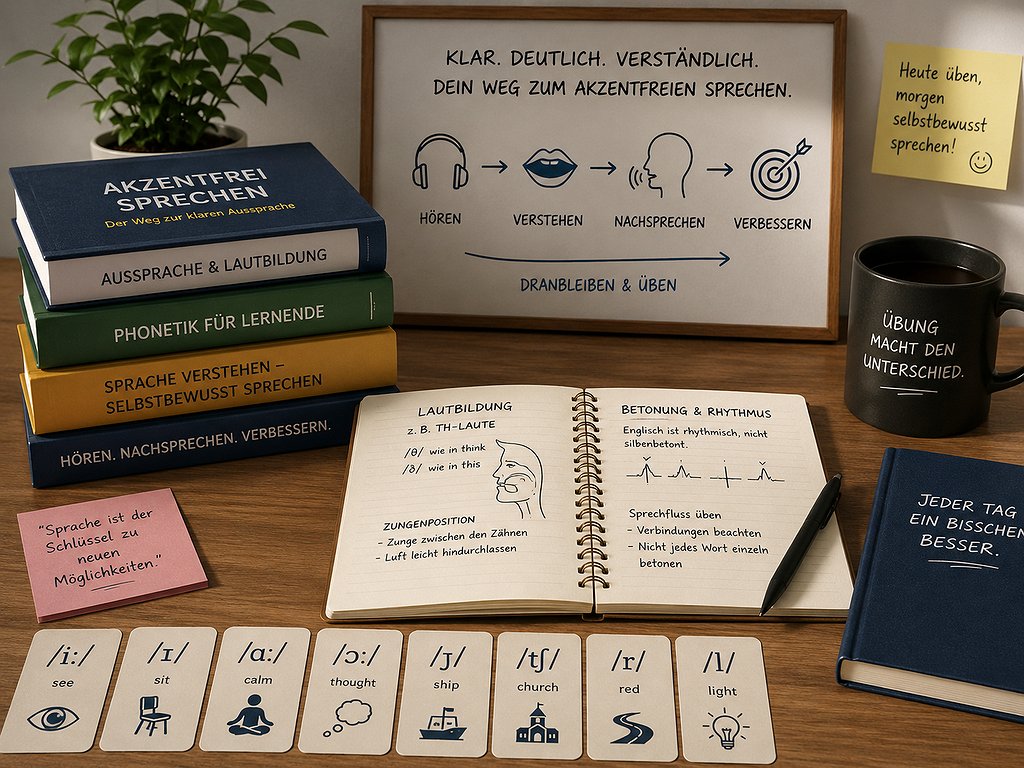
Introduction: Is Accent-Free Speaking Possible?
Many people dream of speaking a foreign language without an accent. But is that really an achievable goal or just a myth? In this article, you will learn about the factors involved, how to reach your goal, and the strategies that will help you achieve your language objectives.
In short: Speaking without an accent is an ambitious goal for many learners, but with the right method, plenty of practice, and dedication, it is possible. In this article, you will learn how to improve your pronunciation and achieve your goal.
1. What Does Accent-Free Speaking Mean?
Accent-free speaking refers to the ability to speak a language without noticeable accent. This means not only producing the correct sounds but also mastering the intonation patterns and rhythm of the language. An accent-free speaker often sounds as if they grew up speaking the language.
1.1. The Role of Accent
An accent is the pronunciation of a language shaped by the speaker's regional or social background. Everyone has an accent that reveals their mother tongue or origin. Accent-free speaking means mastering the phonological features of a language to the extent that your accent is no longer perceivable.
1.2. Why is Accent-Free Speaking Important?
Accent-free speaking can offer many advantages, especially in professional or academic contexts. It can help avoid misunderstandings and facilitate communication. Additionally, it can boost your confidence when you feel more secure speaking a foreign language. A study from the University of Illinois shows that people who speak without an accent are often perceived as more competent and credible, improving their career opportunities.
1.3. Psychological Aspects of Accent
The accent can also have psychological effects. People with a strong accent may sometimes feel insecure or inferior. This insecurity can impair their ability to communicate. Accent-free speaking can help break down these barriers and increase self-confidence.
2. The Challenges of Accent-Free Speaking
There are several challenges that arise when learning a new language with regard to speaking without an accent. These challenges can be both physiological and psychological.
2.1. Physiological Challenges
Physiological challenges pertain to the physical aspects of speaking, such as the movements of the tongue, lips, and palate. Many learners struggle to produce the sounds typical for the target language correctly. This can be due to differences in the phonetic systems of the languages. For example, German has sounds like “ü” or “ö,” which do not exist in English, making correct pronunciation difficult.
2.2. Psychological Challenges
Psychological challenges include fear and insecurity when speaking. Many people are afraid of making mistakes, which can prevent them from expressing themselves and practicing. This fear can significantly hinder the learning process and lead to learners not making the progress they desire. A study in the “Journal of Language and Social Psychology” has shown that these fears often stem from negative past experiences, such as being bullied for language mistakes.
2.3. Social Challenges
In social situations, it can be challenging to practice accent-free speaking. Often, learners feel nervous in groups or formal settings and make mistakes. Here, support from like-minded individuals can be crucial in creating a safe environment. Language tandems or conversation groups are effective in overcoming this social barrier.
3. Strategies for Improving Pronunciation
There are several strategies that can help improve your pronunciation and achieve accent-free speaking. Here are some effective methods:
- 1. Listen Actively: Listen to native speakers and pay attention to their pronunciation, intonation, and rhythm. Podcasts, movies, and music are excellent resources.
- 2. Imitate: Try to imitate the sounds and melody of the language by speaking with native speakers or using language resources. Mimicking dialogues from movies can be particularly helpful.
- 3. Use Language Apps: Apps like Duolingo or Rosetta Stone offer pronunciation exercises. These platforms often provide interactive tasks tailored to your individual needs.
- 4. Record Yourself: Listen to your own pronunciation to identify weaknesses and work on them. You can also use specific software that analyzes your pronunciation and suggests improvements.
- 5. Attend Language Courses: Language courses that focus on pronunciation can be very helpful. Look for courses led by native speakers to hear authentic pronunciation.
- 6. Work with a Language Partner: Find a partner to practice with regularly to improve your skills. Tandem partners can provide valuable feedback.
- 7. Practice Regularly: Regular practice is key to success – schedule fixed times in your daily routine to practice. Set daily or weekly goals to improve your pronunciation.
4. The Role of Feedback
Feedback is a crucial part of the learning process. It helps you recognize your progress and identify areas where you can improve.
4.1. Seeking Constructive Feedback
Get feedback from teachers, language partners, or native speakers. They can provide valuable insights on how to improve your pronunciation. It's important to be open to criticism and view it as an opportunity for improvement.
4.2. Self-Feedback
Self-feedback is also important. Pay attention to how you speak and compare your pronunciation with that of native speakers. This can help you objectively assess your progress. A good method is to make audio recordings of yourself and compare them with examples from native speakers.
4.3. Feedback from Technology
Utilize technologies specifically designed to provide feedback, such as language apps with speech recognition software. These can help you improve specific sounds and evaluate your pronunciation in context.
5. Practice: Steps to Accent-Free Speaking
Practice: Steps to Accent-Free Speaking
Here are some concrete steps you can take to achieve your goal of speaking without an accent:
- Step 1: Listen to podcasts or audiobooks in your target language daily to develop a feel for the sound of the language.
- Step 2: Practice repeating sentences and phrases to solidify the correct intonation and pronunciation. Use online resources that help you find the right stress.
- Step 3: Regularly practice pronunciation exercises with a teacher or language partner. Schedule weekly appointments to work specifically on your pronunciation.
- Step 4: Set weekly goals, such as learning new words or phrases and pronouncing them correctly. Create a list of words that are difficult for you and practice them deliberately.
- Step 5: Use voice recordings to document your progress. Listen to old recordings to recognize your progress and make adjustments.
- Step 6: Integrate what you’ve learned into your daily life by consciously using expressions and vocabulary in conversations.
6. Common Mistakes When Learning Accent-Free Pronunciation
When striving for accent-free speaking, many learners make the same common mistakes. Here are some of the most frequent:
- 1. Overemphasis: Some learners tend to overemphasize sounds, leading to an unnatural pronunciation.
- 2. Ignoring Intonation and Rhythm: Accent-free pronunciation requires not only the correct sounds but also a good feel for the rhythm of the language.
- 3. Insufficient Practice with Native Speakers: Many learners make the mistake of focusing only on self-study and not practicing enough with real speakers.
- 4. Neglecting Self-Reflection: Learners often do not listen to themselves or ignore the feedback they receive. It’s important to conduct self-assessments regularly.
7. Conclusion: Accent-Free Speaking – An Achievable Goal?
Speaking without an accent is indeed a challenge, but with the right method and plenty of practice, it is certainly achievable. The combination of active listening, imitation, targeted training, and constructive feedback can significantly improve your pronunciation. Remember, patience and perseverance are key.
If you need support on your path to accent-free speaking, you can find a suitable learning partner or mentor on Skill Tandem (skilltandem.app) who can help you reach your goals. Sign up for free
FAQ: Frequently Asked Questions about Accent-Free Speaking
How long does it take to speak without an accent?
The duration depends on various factors, including your previous experiences and the time you invest in practicing. Some learners may require months, while others might take years.
Is it necessary to speak without an accent?
Speaking without an accent is not strictly necessary, but it can be beneficial in certain situations, especially in professional contexts.
Can I achieve accent-free speaking through online resources?
Yes, many online resources like language apps and courses provide exercises for improving pronunciation and can help you achieve accent-free speaking.
What are the best exercises for accent-free speaking?
The best exercises include shadowing, practicing with a language partner, and listening to native speakers. These methods help you better grasp the intonation and sound of the language.
Are there specific courses for accent-free speaking?
Yes, many language schools and online platforms offer specialized courses focusing on pronunciation and accent-free speaking.
8. Advanced Strategies for Improving Pronunciation
In addition to the basic methods, there are advanced strategies you can integrate into your practice to further refine your pronunciation:
- 1. Phonetics Training: Learn the phonetic symbols and sound production of the target language. This helps you practice the sounds more effectively.
- 2. Practicing Minimal Pairs: Minimal pairs are words that differ by only one sound (e.g., “bit” and “beat” in English). Practicing these pairs can help you hear and produce subtle differences.
- 3. Analyzing Intonation Patterns: Study specific intonation patterns of the target language. Take time to understand how emotions or intentions are conveyed through intonation.
- 4. Acting Techniques: Use techniques from acting to improve your pronunciation and intonation. Role-playing or reenacting scenes can help you immerse yourself in the language.
- 5. Linguistic Immersion: Seek opportunities to immerse yourself in the language, such as extended stays abroad or engaging with native speakers.
9. Comparison with Alternatives: Dialect vs. Accent-Free Speaking
An interesting topic related to accent-free speaking is the distinction between a dialect and an accent. A dialect is often a variety of a language that differs in vocabulary, grammar, and pronunciation. In contrast, an accent refers to pronunciation within a language. There are many dialects within a language, each with its own charm and expression.
It’s important to recognize that not every dialect should be viewed as “bad.” In many social and cultural contexts, a dialect can convey pride and identity. However, it can be advantageous to speak without an accent in certain professional or academic environments.
10. Costs & Efforts
The effort required to learn accent-free pronunciation can vary significantly depending on your specific goals, current level, and the resources you utilize. Here are some aspects to consider:
- Time Commitment: Schedule regular practice sessions. Ideally, aim for 30 minutes to an hour each day to achieve significant progress.
- Courses and Resources: Invest in high-quality resources or courses that focus on pronunciation and phonological elements. This can range from online courses to private tutoring.
- Technology: Utilize apps or software specifically designed to improve pronunciation. These may involve costs but often provide valuable support.
- Travel and Interaction Costs: If you plan to travel abroad or participate in language immersion programs, the costs for travel and accommodation can be substantial.
11. Further Tips
To support your journey toward accent-free speaking, here are some additional tips:
- 1. Be Patient: Progress can take time, so be patient with yourself.
- 2. Accept Mistakes: Mistakes are part of the learning process. They help you identify weaknesses and work on them.
- 3. Seek Variety: Listen to different native speakers to learn a broader spectrum of accents and speaking styles.
- 4. Have Fun: Incorporate games or interesting activities into your learning to maintain motivation.




Danke für die Tipps, besonders die Sache mit der Intonation fand ich super hilfreich!
Hey Christian, freut mich echt, dass dir die Intonation-Tipps geholfen haben! Der Artikel war auch super klar und gut strukturiert, das macht das Lesen echt angenehm 😊