
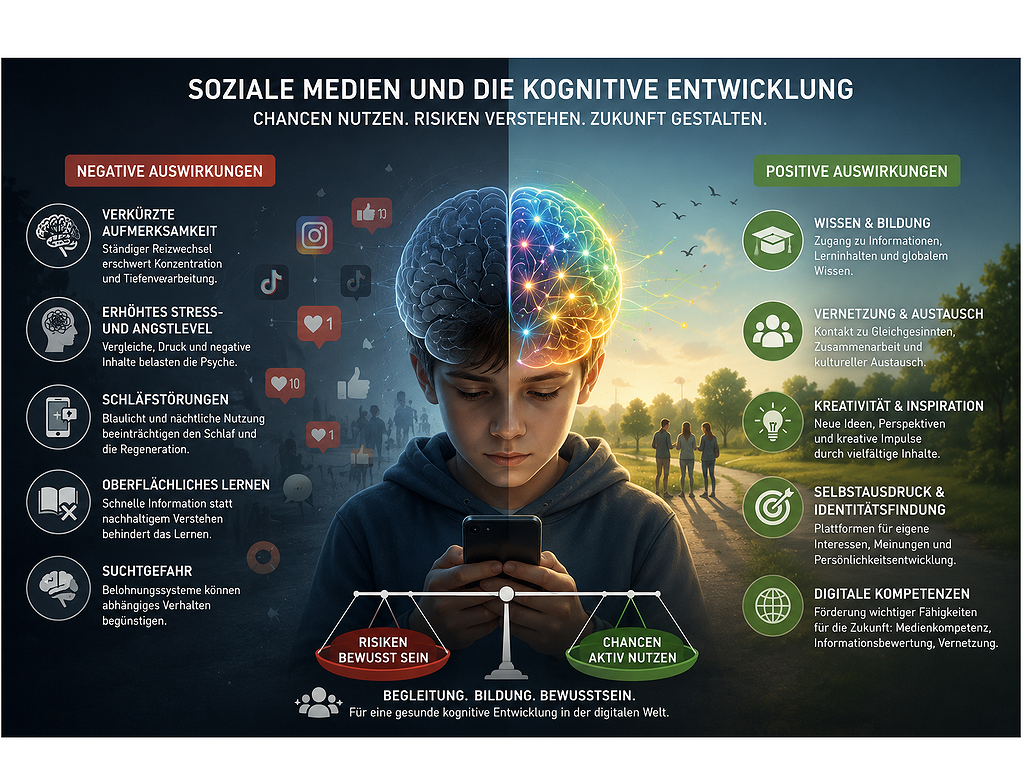
Introduction: TikTok and Its Effects on Our Brains
In today's digital world, TikTok has become one of the most popular platforms for consuming short videos. But as we enjoy the latest dance trends, a question arises: Does TikTok negatively impact our cognitive development? In this article, we will explore the latest findings from neuroscientists studying this topic.
In short: Neuroscientific studies reveal that TikTok can have both positive and negative effects on the brain. In this article, you will learn how TikTok influences attention spans and what strategies you can use to minimize negative effects.
1. The Attention Economy of TikTok
The way TikTok presents content has revolutionized user attention. Short, concise videos are designed to quickly engage and entertain users. This form of media consumption often leads users to jump from one video to the next without truly engaging with a topic. Neuroscientists argue that this constant distraction can lead to a shortened attention span.
Studies show that the average attention span has decreased in recent years. This may be exacerbated by the constant availability of quickly consumable content like TikTok. A study from the University of California found that users who regularly consume TikTok have difficulty focusing on longer texts or complex topics.
- Researchers observe a decline in the ability to focus deeply.
- The rapid succession of content promotes superficial processing of information.
- The brain becomes accustomed to instant rewards.
- Younger generations struggle to engage with a topic for extended periods.
2. Neuroscientific Findings on TikTok
Neuroscientists have conducted various studies to investigate the effects of TikTok on the brain. An interesting finding is that TikTok can influence the way we process information. The brain becomes accustomed to the quick rewards that come from scrolling through endless videos. This can have long-term implications for cognitive development.
A study published in 2026 shows that participants who regularly use TikTok exhibit a significant decrease in patience and critical analysis skills. This could lead to a lack of problem-solving abilities, as users spend less time thinking about complex issues.
- Fascination with Visual Content: TikTok uses visual stimuli to captivate users.
- Reduced Reaction Times: Users tend to respond quickly, promoting superficial interaction.
- Reward System: The brain releases dopamine, encouraging users to stay longer.
- Social Validation: Likes and shares lead to increased platform usage.
3. The Psychological Effects of TikTok
TikTok not only affects cognitive processing but also impacts the psychological health of its users. The constant comparison with other users can lead to diminished self-esteem. Young people are particularly vulnerable to the negative effects of social media.
A 2026 survey found that 67% of TikTok users reported feeling dissatisfied when comparing their videos to those of other users. This constant self-criticism can lead to anxiety and depression.
Tip: To minimize the psychological effects of TikTok, it's essential to take regular breaks and reflect on your media usage. Keeping a journal about your media consumption can help identify patterns and make changes.
4. Strategies to Minimize Negative Effects
To minimize the negative effects of TikTok on cognitive development and mental well-being, users can adopt the following strategies:
- Set fixed times for using TikTok.
- Alternate between different media forms to ensure balanced information intake.
- Engage in activities that require deeper concentration, such as reading books or learning an instrument.
- Avoid consuming content that negatively impacts your self-esteem.
Practice: Healthy Media Usage
Below is a step-by-step guide to making TikTok usage healthier:
- Step 1: Set a daily time limit for using TikTok. A recommended limit is 30 minutes per day.
- Step 2: Create a list of content that genuinely interests you and is informative.
- Step 3: Take regular breaks to ground yourself. Try to take a short 5-minute break every 30 minutes.
- Step 4: Reflect on your consumption and its impact on your well-being. Ask yourself how you feel after a TikTok marathon.
- Step 5: Look for alternative activities that promote concentration, such as meditation, sports, or creative hobbies.
5. Common Mistakes in TikTok Usage
There are several common mistakes users make when using TikTok that can amplify negative effects:
- Unreflective Usage: Many users mindlessly scroll through videos without considering what they are consuming, which can lead to an insidious dependence.
- Lack of Breaks: Continuous scrolling without breaks can lead to mental overload and decrease the ability to concentrate.
- Making Comparisons: Constantly comparing oneself to others can significantly damage self-esteem and lead to unhappy feelings.
- Inactive Time: Spending time on TikTok instead of pursuing more active hobbies can diminish overall quality of life.
6. Advanced Strategies for Conscious Use
For users looking to engage with TikTok more consciously, there are several advanced strategies:
- Curate Content: Rather than leaving it to the algorithm, actively choose what content you want to see. Create a list of channels that offer positive and educational content.
- Develop Media Literacy: Users should learn to evaluate the quality of the information they consume. This can be achieved through training in critical thinking.
- Create Interactive Content: Instead of just consuming, users can create their own content to increase engagement. This fosters not only creativity but also a sense of self-efficacy.
- Utilize Networks: Look for communities that positively impact your well-being. Join groups that focus on healthy media use or creative projects.
7. Case Study
An example of a successful project for healthy media use is the “#PauseChallenge,” initiated by a group of psychologists. This challenge encourages users to take at least 30 minutes off TikTok each day and use that time for creative or relaxing activities. Participants reported significant improvements in their self-esteem and concentration. Some even reported a positive change in their social relationships as they spent more time with friends and family.
8. Comparison with Alternatives
There are many alternative platforms to TikTok that also offer short videos but focus on different aspects. Platforms like Instagram Reels or YouTube Shorts provide similar features, but the nature of the content can vary. While TikTok often targets viral trends, platforms like YouTube tend to promote educational content or longer formats. Therefore, it is important to choose the platform that best suits your interests and goals.
9. Costs & Effort
Using TikTok is free, but the time spent on the platform can require significant cost-benefit consideration. Many users spend hours on TikTok daily, which can lead to a decrease in productivity. A study has shown that users who spend more than two hours daily on social media exhibit significantly lower productivity levels in other areas of life. Therefore, it is crucial to critically evaluate the effort invested in consuming content.
Conclusion: Finding the Balance
In summary, TikTok can have both positive and negative effects on our cognitive development and mental health. It is up to us to find a balance and make conscious decisions about our media consumption. By following the strategies outlined above, we can harness the benefits of TikTok while minimizing the risks.
Skill Tandem (skilltandem.app) offers a platform to find a suitable learning partner or mentor. Sign up for free and realize your learning goals!
FAQ: Frequently Asked Questions about TikTok and Its Effects
1. Does TikTok make you dumb?
Using TikTok can shorten attention spans and lead to superficial information processing, making learning more difficult.
2. How does TikTok impact mental health?
Comparisons with other users can diminish self-esteem and lead to mental health issues. It is important to regularly distance oneself from the platform.
3. Are there positive effects of TikTok?
Yes, TikTok can also have positive effects, such as promoting creative expression and allowing new skills to be learned. Some users intentionally use TikTok for educational purposes or to learn new skills.
4. How can I better manage my TikTok usage?
Set fixed times and regularly reflect on your consumption to minimize negative effects. It may also be helpful to use apps for time management.
5. Are other social media platforms better than TikTok?
Every platform has its pros and cons. What matters is how you use them and what content you consume. Some users find that platforms like LinkedIn are more beneficial for professional development.


Könnte man das mal konkret an einem Beispiel zeigen, wie man die negativen Effekte minimieren kann.