
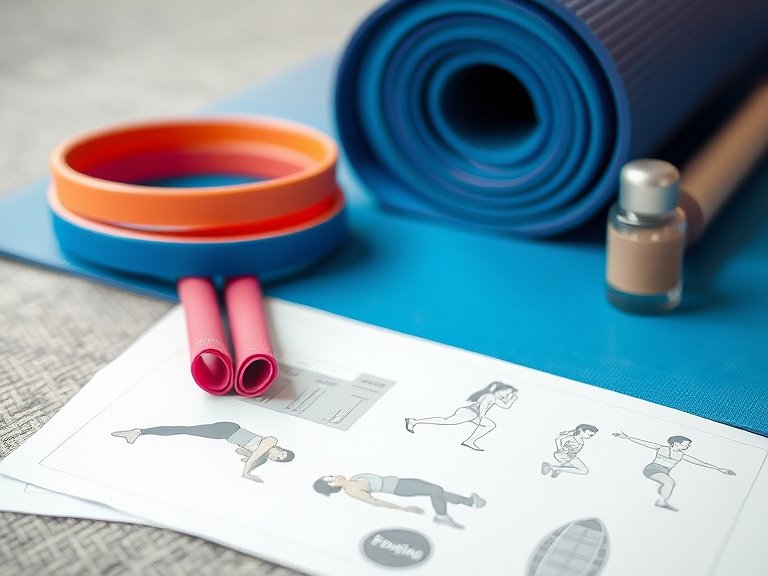
Introduction: Why is Mobility Training Important?
Mobility training is an essential component of a holistic fitness approach. It not only helps to increase flexibility but can also prevent injuries and improve overall quality of life. Many people spend the majority of their day sitting, leading to stiff joints and muscles. Mobility training can help counteract this.
In short: Mobility training enhances the flexibility and mobility of your joints and muscles. In this article, you will learn how to easily integrate mobility training into your daily routine to achieve your fitness goals.
1. What is Mobility Training?
Mobility training encompasses a variety of exercises aimed at improving the range of motion of the joints and flexibility of the muscles. It combines elements of stretching, stability, and strengthening. The goal is to promote mobility while simultaneously strengthening the muscles.
A typical mobility training session may include exercises such as dynamic stretching, joint mobilization, and specific movement patterns. These exercises are often gentle and can be performed in conjunction with other forms of training.
2. The Benefits of Mobility Training
There are numerous benefits that mobility training offers:
- Improved mobility and flexibility
- Reduced risk of injury
- Increased athletic performance
- Better posture and reduced back pain
- Enhanced circulation and recovery
These benefits are particularly important for active individuals, but also for those who sit a lot or have little movement in their daily lives. Studies show that regular mobility training not only boosts physical well-being but also supports mental health. A study from Harvard University found that mobility training reduces stress and enhances overall well-being.
3. How to Integrate Mobility Training into Your Daily Routine
Integrating mobility training into your daily life doesn't require major changes. Here are some practical tips:
- Start your day with mobility exercises: Begin each morning with 5-10 minutes of mobility training. Exercises like arm circles, hip flexor stretches, or kneeling lunges can help prepare your body for the day.
- Take breaks while sitting: If you sit for long periods, schedule regular breaks. Stand up, move around, and do short stretching exercises to mobilize your joints.
- Incorporate mobility into your warm-up: Before any workout, include some mobility exercises to prepare your muscles and joints. This can help prevent injuries and boost performance.
- Integrate mobility into your training program: Add specific mobility exercises to your existing training program. This can be done as a standalone session or as part of your warm-up.
- Evening relaxation: End your day with a short mobility session or stretching routine. This promotes recovery and helps you unwind from the day's stress.
4. Examples of Effective Mobility Exercises
Here are some effective mobility exercises you can easily incorporate into your daily routine:
- Shoulder circles: Stand upright and circle your shoulders forward and backward. This improves shoulder mobility.
- Hip flexor stretch: Step into a lunge position and stretch the hip of the back leg. Hold this position for 20-30 seconds.
- Spinal rotation: Sit on the floor, pull one leg in, and twist your torso to the opposite side. This promotes spinal flexibility.
- Ankle mobilization: Stand on one leg and circle the foot of the other leg to increase ankle mobility.
Tip: Perform each exercise 2-3 times a week for the best results.
5. Challenges and Solutions for Integrating Mobility Training
There are some common challenges you might face with mobility training:
- Lack of time: Schedule fixed times for your mobility training to make it a habit. Even 5-10 minutes daily can make a significant difference.
- Lack of motivation: Find a training partner or group through Skill Tandem to keep each other motivated. Working out together makes it more enjoyable and encouraging.
- Uncertainty about exercises: Use online resources or apps to learn new mobility exercises. Platforms like YouTube offer numerous tutorials and guides.
- Pain or discomfort: Listen to your body and adjust the exercises to avoid overexertion. Consulting a physical therapist or trainer is advisable if in doubt.
6. Advanced Strategies for Mobility Training
If you already have experience with mobility training, you can further enhance your routine:
- Fascial training: Incorporate fascial training using foam rollers or massage balls to release tension and increase mobility. Studies show that fascial training can enhance circulation and recovery.
- Proprioceptive Neuromuscular Facilitation (PNF): This technique combines stretching with isometric contractions to enhance flexibility. An example is stretching a muscle, followed by tensing it and then stretching again. PNF has been shown to be particularly effective in improving range of motion.
- Vary the exercises: Regularly change your exercises to target different muscle groups and avoid monotony. A varied program not only promotes motivation but also the effectiveness of the training.
- Increase intensity: As you progress, increase the intensity of your exercises by adding more repetitions or longer hold times. This can accelerate your progress and lead to further improvements in mobility.
7. A Practical Example: Mobility Training in the Office
Imagine you work in an office and spend most of your day at a desk. You notice that you often suffer from back pain and stiff shoulders. Here’s an example of how to integrate mobility training into your office routine:
- 8:00 AM: Start your workday with 5 minutes of arm and shoulder circles to relieve tension.
- 10:00 AM: Take a 5-minute break to stretch your hip flexors. Stand in a lunge position and hold the stretch.
- 12:00 PM: During your lunch break, take a short walk and use the time to stretch your legs.
- 3:00 PM: Stand up and perform 2-3 minutes of ankle mobilizations to activate your joints.
- 5:00 PM: End your workday with a quick spinal rotation to relieve back tension.
8. Mobility Training Checklist
Here’s a handy checklist to ensure you perform your mobility exercises effectively:
- Have I written down my exercises?
- Am I scheduling regular breaks throughout the workday?
- Do I have the right tools (e.g., foam roller, stretching mat)?
- Am I setting realistic goals for my mobility routine?
- Do I have a workout partner or group to keep me motivated?
9. Costs & Effort
Mobility training can be very cost-effective, as many exercises can be performed without special equipment. A good yoga or exercise mat can be helpful but is not strictly necessary. The time you invest in mobility training can be minimal—just 10-20 minutes a day can yield significant benefits. If you choose to participate in specific classes or purchase materials, costs can vary, but many online resources are free.
10. Common Mistakes in Mobility Training
There are several common mistakes people make when doing mobility training:
- Performing movements too quickly: Many tend to rush through exercises, which decreases effectiveness. Focus on performing movements in a controlled and slow manner.
- Insufficient warm-up: Effective mobility training should always begin with an adequate warm-up. This helps to prevent injuries and prepares the muscles.
- Ignoring pain: Listen to your body. If you feel pain, stop the exercise and adjust it or consult a professional.
- Not developing a routine: Mobility training requires consistency. Many make the mistake of practicing it only sporadically. Establish a regular routine to achieve the best results.
11. Conclusion: Mobility Training for a Better Life
Mobility training is a simple yet effective method to improve your flexibility and prevent injuries. By making small changes in your daily routine, you can benefit from long-term advantages. Remember, you can find training partners and sports buddies on Skill Tandem to support you on your journey.
Sign up for freeFAQ: Frequently Asked Questions about Mobility Training
How often should I do mobility training?
It is recommended to perform mobility training 2-3 times a week for noticeable results. However, you can also include short daily sessions as needed.
Can I do mobility training at the office?
Yes, many mobility exercises can be easily performed at the office. Short breaks for stretching exercises are ideal to relieve tension.
Is mobility training suitable for beginners?
Absolutely! Mobility training can be tailored to any fitness level. There are many simple exercises that are suitable for beginners.
How long should a mobility session last?
A mobility session should last at least 10-15 minutes to be effective. However, you can adjust this time based on your needs.
Can I combine mobility training with other forms of exercise?
Yes, mobility training can be easily combined with strength training, endurance training, or yoga. It serves as an excellent warm-up and cooldown.




Mobility Training klingt fast wie Yoga, aber mit mehr Fokus auf Kraft und Stabilität.