Job Hugging: When People Hug Their Job Out of Fear
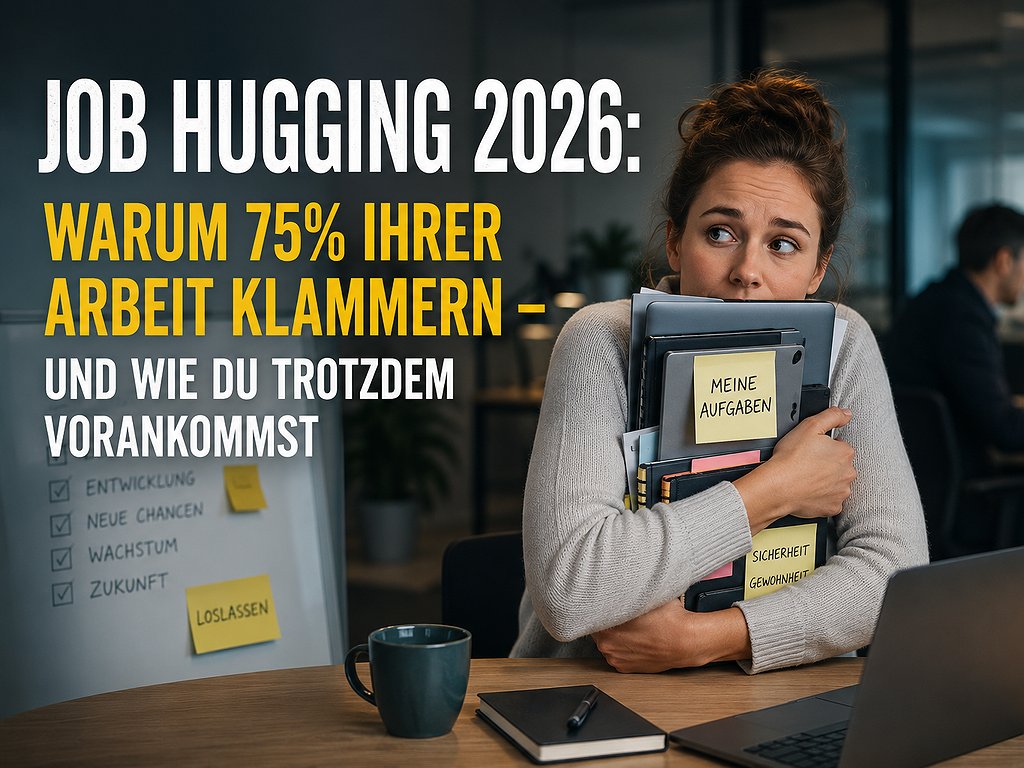
Three years ago, it was "Quiet Quitting" that was the career trend. Two years ago, it was "Great Resignation". In 2026, it's the opposite: "Job Hugging". The term describes employees who actively hold on to their current job – not out of love for their work, but out of fear of what's outside.
The numbers are clear: The current Monster Job Hugging Report shows that around 75% of all employees plan to stay in their current job until at least 2027. 48% of them explicitly state fear and economic uncertainty as the main reason. For DACH, the numbers are similar – despite the shortage of skilled workers, the trust in an easy job change is at a historical low.
1. What is Job Hugging – and what is it not?
Job Hugging is more than "not wanting to change". It's a specific behavior pattern with clear characteristics:
- You say "no" to offers that you would have accepted two years ago.
- You reduce your risk profile – no internal changes, no new projects, no open conflicts.
- You make yourself cautious and invisible: no mistakes, but also no initiatives.
- You say "I'm just fine", but really mean "I'm afraid".
- You prolong the status quo, instead of changing it.
Important: Job Hugging is not the same as loyalty. Loyal employees engage actively, grow with the company. Job Huggers shrink.
2. Why now? The three drivers of 2026
Driver 1: AI fear and layoff shock
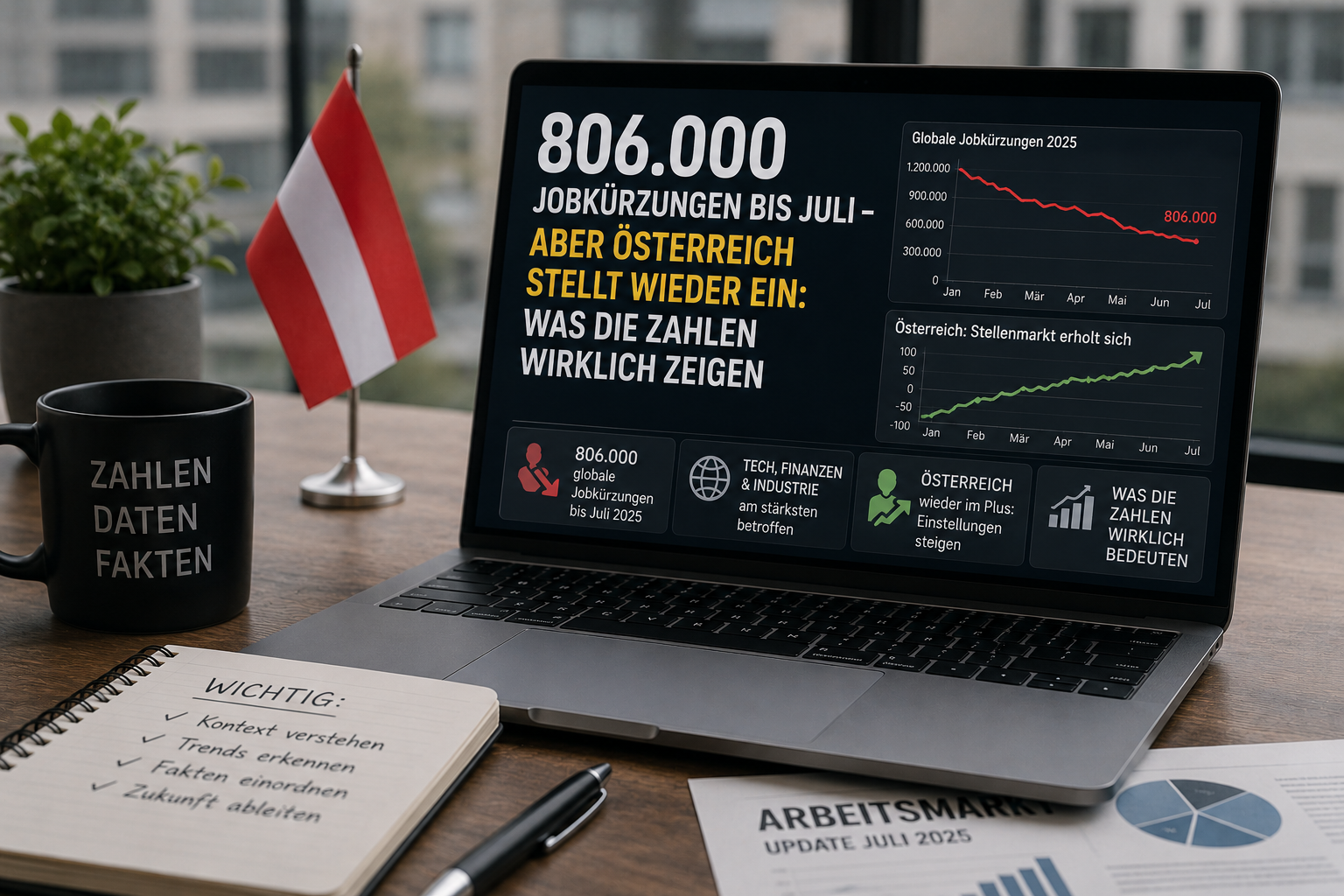
Over 443,000 announced layoffs in the US in the first half of 2026, AI as the main reason in every third layoff in June. In Germany and Austria, the numbers are smaller, but the media presence of AI layoffs at Accenture, Block, Klarna, and PayPal has a psychological effect: Everyone knows someone who has been affected.
Driver 2: "Ghost Jobs" and frustrating job applications
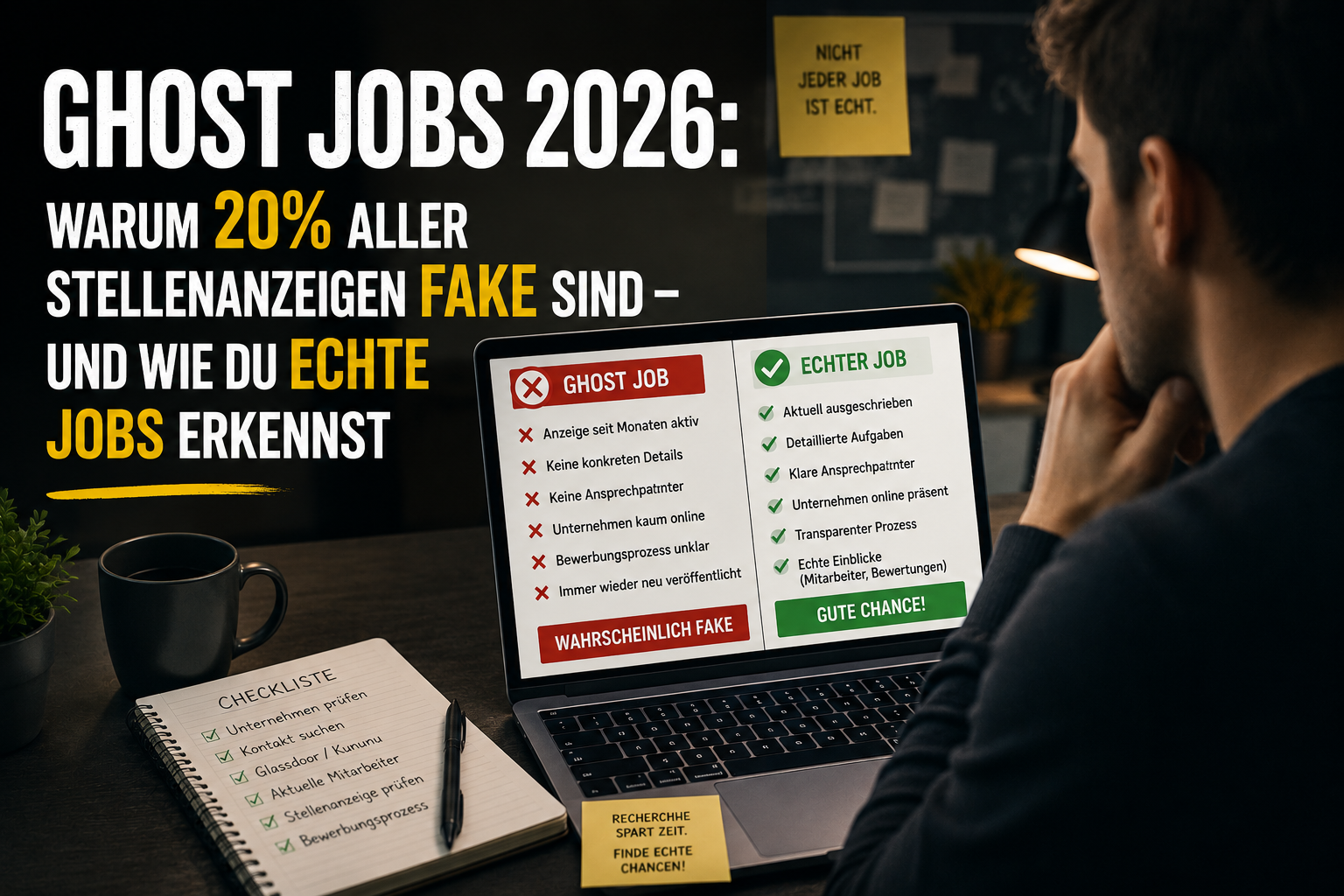
Studies estimate that up to 20% of all online job postings are so-called "Ghost Jobs" – positions that are not really actively filled. When someone applies 40, 60, 100 times and only gets rejections, it's understandable that they cling to what they have.
Driver 3: Inflation and living costs
Since the last two years, rents in Vienna, Berlin, Zurich, and Munich have risen by two digits. When someone moves or risks a job change today, they can end up in a completely different cost reality. Job Hugging is also a financial self-defense.
3. The hidden costs of Job Hugging
What looks reasonable at first glance – staying when it's uncertain – has high costs in the long run:
Skill stagnation
When someone stays in the same job for 5 years without actively learning, they lose relevance faster than ever before. The half-life of skills is currently around 2.5 years.
Salary loss
Studies consistently show: When someone stays internal, they earn 15–30% less over 10 years compared to someone who strategically changes jobs 2–3 times. Job Hugging costs you money.
Psychological erosion
The state of "staying out of fear" is a known burnout precursor. It robs you of autonomy, which, according to research, is one of the strongest predictors of job satisfaction.
Network atrophy
If you only have contact with your current team, your external network will wither away. But that's exactly what you need when the situation changes.
Praxis-Block: The 4-Step Plan against Job Hugging
You don't have to quit to get out of Job Hugging. What you need is a feeling of movement and control – without existential risk.
=== ÜBERSETZTER HTML ===- Keep a „Career Log": Note down three things you've learned, three achievements, and three new contacts every month. After 6 months, you'll have a powerful record of your development – and a ready update text for LinkedIn or job applications.
- Build 1 new skill every quarter: Not more, not less. Ideal: a skill that gets you out of the „Executor" mode (Communication, Data Analysis, AI Tools, a language). With a learning partner, it works about 3 times better than alone.
- Conduct 1 Info-Meeting every month: No job interview. A coffee with someone whose job interests you. The goal is perspective, not a change. After 12 months, you'll have 12 new perspectives and an active network.
- Negotiate internally: If you're staying, do it strategically. Ask for a new responsibility, a training budget, or a salary adjustment. Job Huggers often forget that staying is a negotiating power.
4. Job Hugging in Germany and Austria: The Special Situation
The DACH region has a special constellation:
- Strong employment protection gives employees more security than on the US market – but also less mobility. This creates a natural basis for Job Hugging.
- Skill shortage in care, craftsmanship, IT, education: paradox – there are jobs, but many don't change despite this because the change to other industries is perceived as risky.
- 13th and 14th month's salary and long notice periods (especially in Austria) make changes bureaucratically complex – an additional structural incentive to stay.
- Language and local networks play a bigger role in the DACH market than elsewhere – those who don't speak the language perfectly or have the local network cling even more.
This means: Job Hugging in DACH has its own rules. Career advice from the US context can't be transferred 1:1.
5. The new career rule 2026: Staying is okay, stagnation is not
The real problem with Job Hugging isn't staying. It's the often accompanying stopping: stopping learning, stopping networking, stopping developing.
The new career rule 2026 is: You're allowed to stay, but you're not allowed to stand still. Those who stay strategically and continue to develop are in a strong position in 2027 – regardless of whether the employer changes or not.
Exactly for this reason is Skill Tandem made. On our platform, you'll find people who accompany you in building your skills and maintain your network actively – without having to make a big decision. A learning partner in a week, a new perspective in a month, a new skill in a quarter. So there's movement in your career, even if you stay. Register now for free and start with a Tandem partner!
FAQ: Frequently Asked Questions about Job Hugging
Is Job Hugging the same as loyalty?
No. Loyalty is active engagement for a company out of positive reasons. Job Hugging is passive clinging out of fear. Both lead to the same external behavior (staying), but to completely different results for you and your employer.
Is Job Hugging in Germany and Austria worse than in the US?
No. The strong employment protection makes staying in DACH structurally more attractive, but the underlying mechanism – fear of change – is similar. Especially in mid-level positions (35-50 years) Job Hugging is widespread in DACH.
Should I rather change then?
Not automatically. Switching at all costs is just as bad as clinging at all costs. The right question is: Am I currently building skills and a network that will keep me flexible? If yes, staying is a good choice. If not, it's risky.
How do I recognize that I'm a Job Hugger myself?
A simple test: When was the last time you applied for something, registered, or took on a new responsibility? If it's been longer than 12 months and you're unhappy – that's Job Hugging.
How can a learning partner help?
A Skill Tandem partner creates commitment from the outside: You meet regularly, exchange ideas, and learn together. This breaks the isolation that often accompanies Job Hugging, and keeps you moving – even if your workplace is currently stagnant.


Ich bin nicht sicher, ob Job Hugging wirklich so einfach zu erkennen ist, ich kenne Leute, die aus anderen Gründen in ihrem Job bleiben